
Forklifts are engineered to perform a single critical task: lifting and moving loads with accuracy across active worksites. Their structure, control systems and operational applications are optimised for reliability under pressure. Across Queensland, including Brisbane, Gold Coast and Sunshine Coast, forklifts are fundamental to industrial logistics where time, terrain and weight precision shape every shift.
Structure: key components and configuration
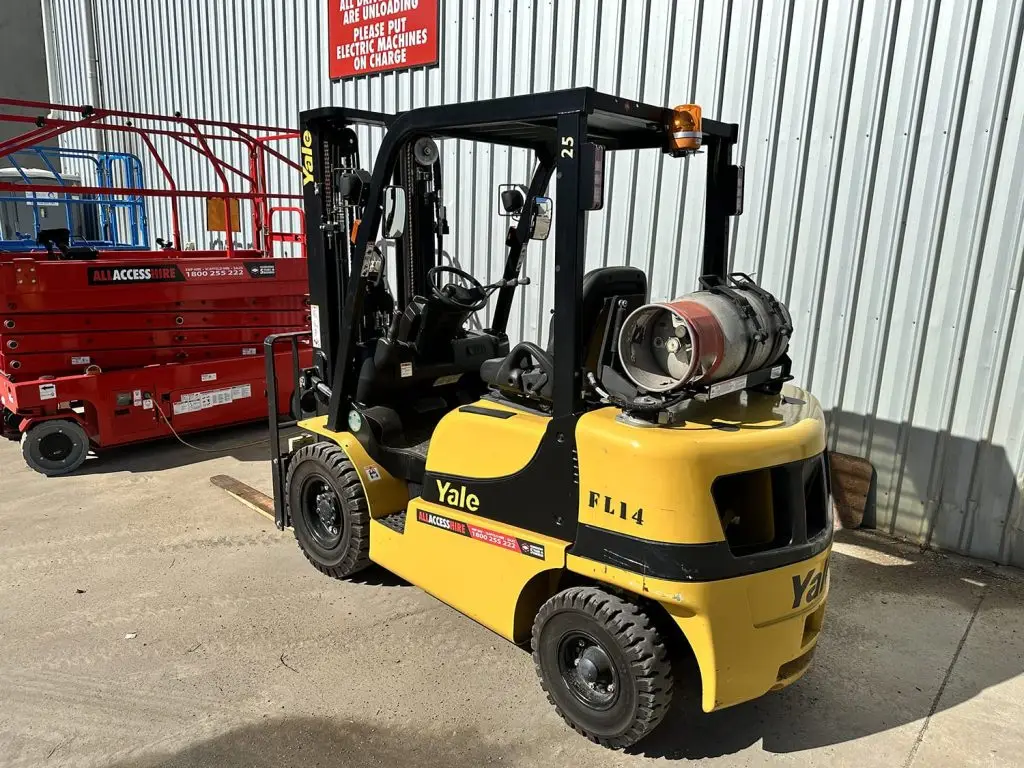
A forklift is defined by four essential assemblies: mast, forks, counterweight and chassis. The mast determines vertical reach and visibility. At All Access Hire, forklift masts are available up to 6 metres, with container masts for confined clearance and extended lift models for high racking applications. Forks are dimensioned for pallet engagement and load stability, and can be paired with rotators or fork positioners if required.
The counterweight is calibrated to match each unit’s lifting range. For example, 2.5T and 3.5T forklifts are configured with matched rear mass to ensure centre-of-gravity integrity under full load. The chassis houses the powertrain and drive controls. Forklifts are available in diesel, LPG and electric configurations. Electric forklifts, typically 1.8T to 3T, are used for enclosed or ventilated environments such as warehouses and supermarket operations. Diesel models (3T to 7T) are preferred for external work under variable conditions.
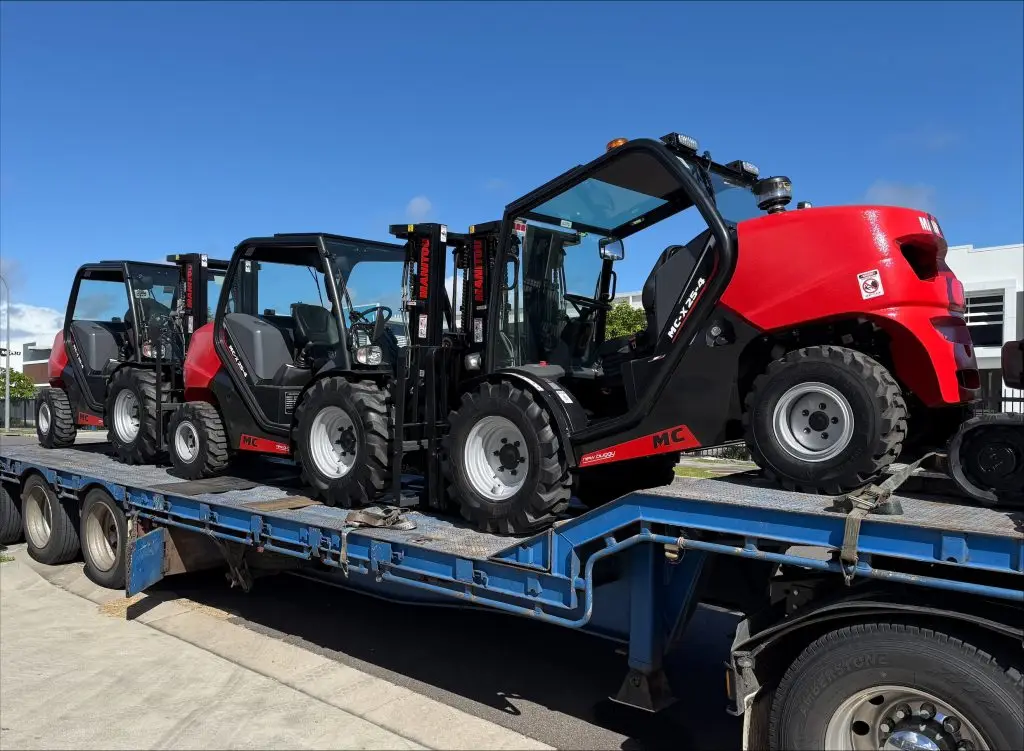
For projects with irregular ground, All Access Hire supplies all-terrain forklifts designed for stability across gravel, compacted soil or unfinished slab. These units feature larger tyres, reinforced suspension and higher ground clearance to ensure traction and load protection.
Control: steering, load response and handling precision
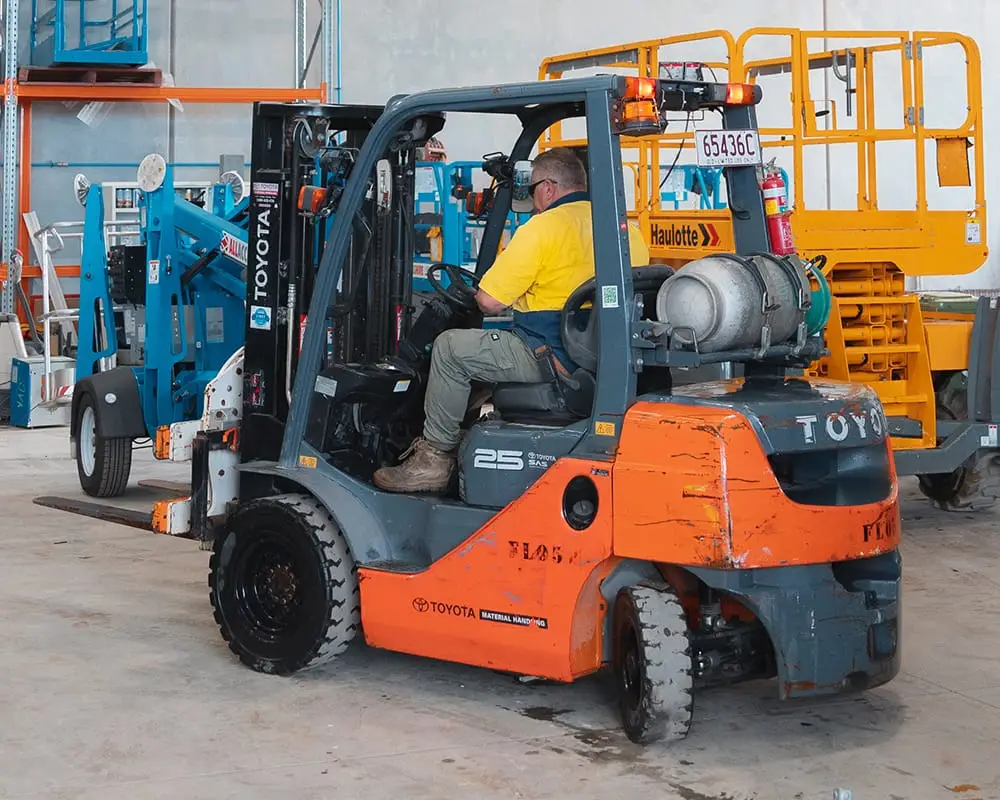
Forklifts are designed to execute tight, repeatable lifting cycles. Their rear-wheel steering allows them to manoeuvre within constrained site geometries, while hydraulic lift and tilt functions provide real-time control of vertical and angular movement. Forklifts available through All Access Hire are equipped with multi-function hydraulic controls and responsive braking systems for high-cycle environments.
Control performance is influenced by both machine condition and specification. Deploying an underpowered forklift for a 4T payload increases wear and raises incident risk. Equally, using a high-capacity model with insufficient mast height compromises placement accuracy. At operational level, every movement—lifting, turning, lowering—must be predictable, especially in spaces with pedestrian traffic, mixed equipment or variable lighting.
Forklift control systems are not generic. Each unit must be selected and configured to match surface type, load profile and required lift frequency. Projects that involve warehouse stacking, formwork relocation or repetitive loading require a forklift with consistent acceleration, lateral stability and directional clarity.
Operational purpose: material flow and site efficiency
The value of a forklift is not in its versatility, but in its contribution to uninterrupted material flow. Forklifts bridge the gap between delivery, staging and installation. In construction sites, they handle heavy inbound loads such as cement packs, structural steel and fabricated components. In logistics, they reduce vehicle dwell time by enabling rapid unloading and repalletising.
Across sectors, forklifts serve one function: to move load faster than manual handling and with more control than crane systems. When integrated with elevating work platforms, forklifts complete the horizontal and vertical handling cycle required for efficient project execution.
Operational purpose also includes runtime optimisation. For example, forklifts with LPG or diesel engines offer extended shift capability without recharge interruption. Electric models, while quieter and emission-free, require infrastructure for charging cycles and runtime planning. All Access Hire advises clients on matching forklift models to energy usage and project phases. Where site conditions are variable or the lift profile is complex, teams can request direct technical support to define a configuration that reduces friction and extends equipment life.