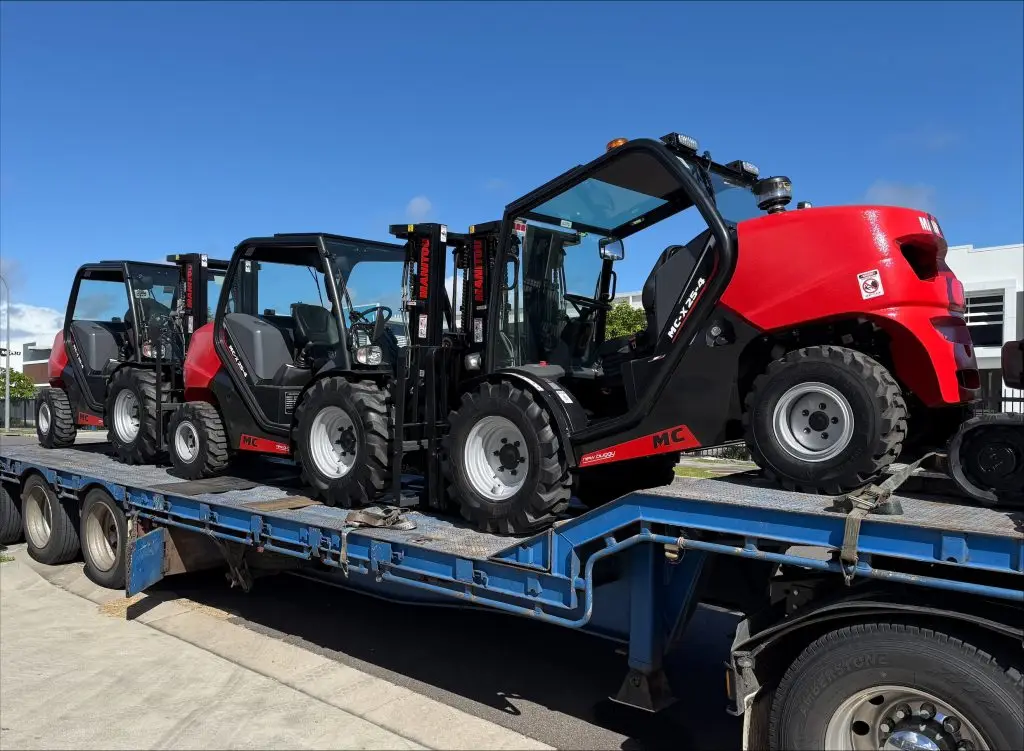

Site conditions directly impact how forklifts operate. Traction, lifting control, component wear and battery behaviour all shift depending on the ground type, temperature and exposure levels. A model that works perfectly in a warehouse can become inefficient or unsafe in a yard with loose gravel, dust or standing water.
This article examines how external factors influence real-world forklift performance and what site managers should consider before hiring equipment for challenging environments.
Wet or soft ground: traction loss and frame strain
Wet soil, clay and loose gravel reduce tyre grip and can cause forklifts to slide or sink under load. Turning or braking becomes harder to control, especially with longer or top-heavy materials.
Mud accumulation also affects steering response and causes uneven tyre wear. Over time, this leads to stress in the chassis and premature damage to mechanical joints. Forklifts used on these surfaces should have deep-tread pneumatic tyres and be checked for undercarriage exposure.
If site access includes ramps or inclined paths, it’s important to check torque performance and wheelbase stability before assigning tasks.
Dust, particles and extreme heat: silent equipment failure
Dry conditions with airborne dust lead to gradual performance loss in engines, cooling systems and hydraulics. On construction or infrastructure sites, this is a frequent issue. Dust enters filters and settles on electrical components, increasing the risk of overheating and fluid contamination.
High temperatures accelerate wear on tyres and hoses. In LPG or diesel units, heat also reduces combustion efficiency and can trigger vapour lock if not monitored. Even electric forklifts are affected by heat when ventilation is blocked or internal electronics are exposed to fine particles.
To reduce these risks, filters must be changed more often, and equipment should be selected based on its cooling capacity and seal quality.
Surface finish: stability and tyre pairing
The surface where a forklift operates determines how safe and effective each movement is. Polished concrete floors in warehouses require non-marking tyres and smooth directional control. Any slip or misalignment can cause load shifts or contact with storage systems.
Unsealed or compacted surfaces introduce different problems. Tyres face impact fatigue, and small stones or debris can get trapped in the wheel well. Forklifts used across mixed ground, such as moving between slab and gravel, need tyre configurations that can adapt without causing vibration or chassis misalignment.
Tyre selection is not just a maintenance issue. It directly affects operator safety, precision and long-term equipment durability.
Ambient temperature: how heat and cold alter forklift behaviour
Batteries lose efficiency when the ambient temperature changes. Cold mornings reduce initial voltage output and slow acceleration. In summer, batteries can overheat if charging systems are not properly ventilated or monitored.
Hydraulic systems are also affected. In colder environments, the fluid thickens, which slows down mast and tilt response. In high heat, seals degrade faster, and internal pressure can build up unexpectedly.
Hiring a forklift without considering ambient conditions leads to small but costly inefficiencies. Downtime, overheating and wear all increase when the model isn’t matched to the temperature range of the operating environment.
All Access Hire provides forklifts configured for specific site conditions. Units are selected based on how and where they’ll be used, not just load capacity.